


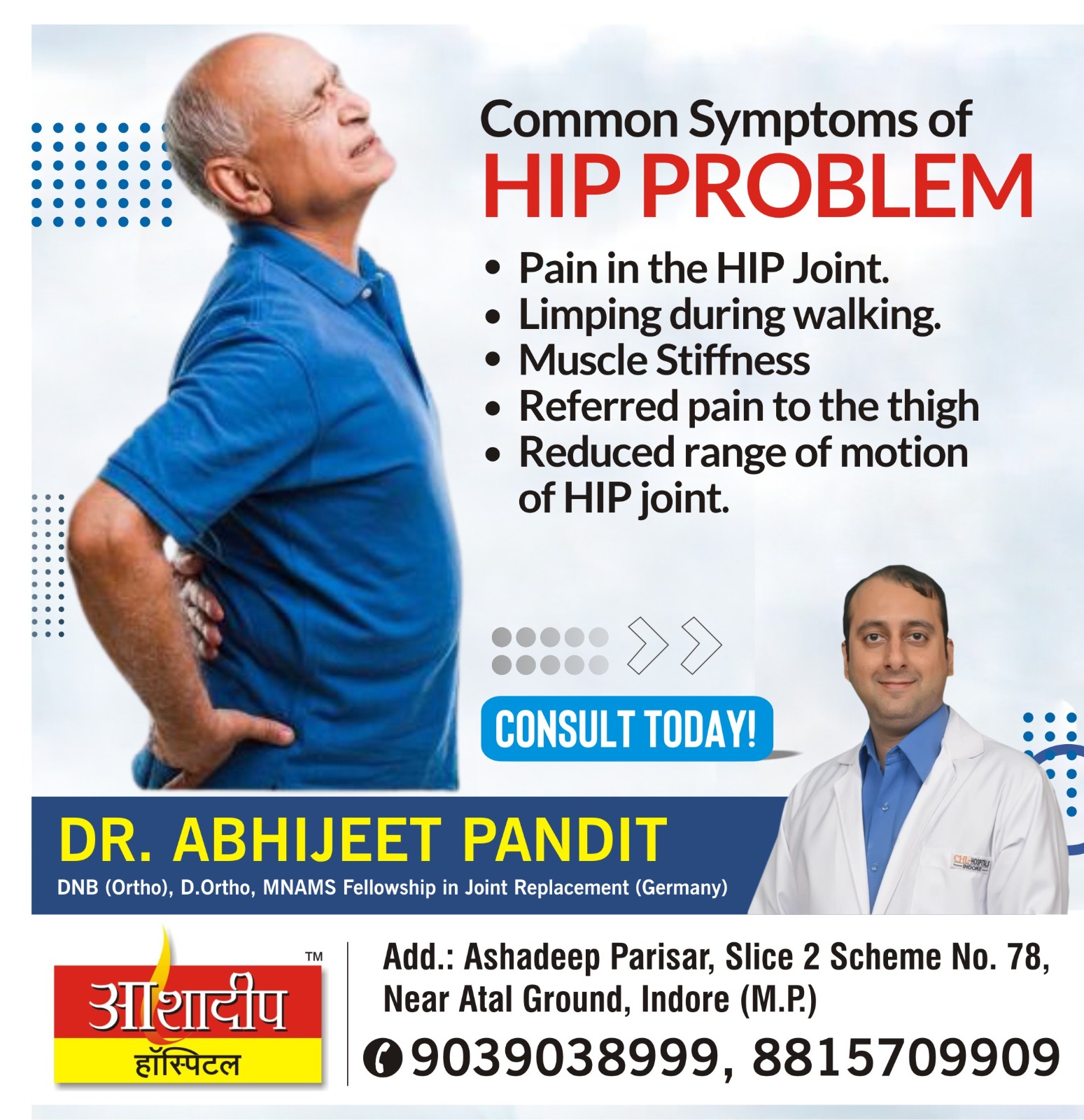
Persistent hip pain can affect walking, sleep, work, exercise, and everyday independence. When medicines, physiotherapy, activity modification, or other conservative measures no longer provide enough relief, a specialist may recommend evaluating whether hip replacement surgery in Indore is appropriate.
Patients searching for the Best Hip Replacement Surgeon in Indore usually want clear guidance about the cause of their hip pain, available treatment options, expected recovery, and whether surgery is actually necessary. At Ashadeep Hospital " Dr. Abhijeet Pandit provides orthopedic assessment and treatment planning based on the patient’s symptoms, imaging, mobility, age, and overall health.
Hip replacement is a surgical procedure in which damaged parts of the hip joint are replaced with artificial components. It is most commonly considered when the hip joint has been significantly affected by arthritis, injury, or other degenerative conditions.
The goal of total hip replacement in Indore is generally to reduce pain, improve movement, and help suitable patients return to daily activities with greater comfort.
A proper orthopedic evaluation is essential because not every patient with hip pain needs surgery.
You should consider consulting a hip replacement surgeon in Indore if hip pain is becoming persistent or is interfering with normal activities.
Common reasons for evaluation include:
Early consultation does not always mean surgery. It helps identify the actual cause and determine whether non-surgical care is still appropriate.
Several conditions can damage the hip joint over time.
Osteoarthritis is one of the common reasons adults develop chronic hip pain. The cartilage covering the joint gradually wears down, leading to pain, stiffness, and restricted movement.
Patients with severe arthritis may eventually require hip joint replacement surgery if conservative treatments no longer provide adequate relief.
Rheumatoid arthritis is an inflammatory condition that can affect multiple joints, including the hip. Long-term inflammation may damage the joint and reduce mobility.
Avascular necrosis occurs when blood supply to the femoral head is reduced, which can cause bone damage and collapse. Depending on severity, hip replacement may be considered.
Certain hip fractures, especially in older adults, may require surgical management. The treatment depends on the fracture type, age, bone quality, and overall health.
Past trauma can sometimes cause gradual joint degeneration, resulting in chronic pain and stiffness years later.
Hip pain can have many causes, so diagnosis should not be based only on symptoms. However, some signs indicate that orthopedic evaluation may be useful.
These include:
If these symptoms continue or worsen, consulting an orthopedic doctor in Indore can help identify the underlying condition.
Before recommending treatment, an orthopedic specialist usually begins with a detailed clinical assessment.
Evaluation may include:
The doctor may ask about:
Hip movement, walking pattern, strength, pain location, and joint flexibility may be assessed.
X-rays are commonly used to evaluate joint space, arthritis, deformity, or bone damage. In selected cases, additional investigations may be required.
These findings help determine whether conservative treatment or surgery is more appropriate.
No. Many patients with hip pain can initially be treated without surgery.
Non-surgical options may include:
Hip replacement surgery is usually considered when symptoms are severe, joint damage is significant, and non-surgical treatment is no longer providing satisfactory relief.
In a typical total hip replacement, the damaged portion of the femoral head is replaced with an artificial component, and the damaged socket surface is also replaced.
The exact surgical method and implant selection depend on several factors, including:
Patients should discuss the planned procedure, implant options, expected recovery, and possible risks before surgery.
For appropriately selected patients, hip replacement surgery in Indore may help improve quality of life by reducing severe pain and restoring useful mobility.
Potential benefits may include:
Individual results vary, and recovery depends on the patient’s overall health, rehabilitation, and surgical outcome.
Recovery after hip replacement is gradual. Patients should follow the rehabilitation plan advised by their medical team.
The recovery process may include:
Patients should avoid comparing their recovery speed with others because age, muscle strength, surgical technique, health status, and pre-surgery mobility can all affect progress.
Physiotherapy is an important part of rehabilitation after total hip replacement.
A structured program may help with:
Exercises should be performed according to the instructions of the treating surgeon and physiotherapist rather than following unsupervised routines.
Good preparation can support smoother recovery.
Patients may be advised to:
Following the medical team’s instructions before surgery is important for patient safety.
When searching for a hip replacement specialist in Indore, patients should focus on relevant orthopedic experience, clear communication, clinical assessment, and treatment planning.
Useful questions to discuss during consultation include:
A good consultation should help the patient understand both the benefits and limitations of treatment.
Older adults may have additional considerations such as osteoporosis, diabetes, heart conditions, balance problems, or reduced muscle strength.
Before surgery, the medical team may evaluate the patient’s overall fitness and associated health conditions.
After surgery, extra attention may be needed for:
Family support can also make the recovery period more manageable.
Patients should follow the discharge instructions provided by their treating team.
They should contact their healthcare provider if they develop concerning symptoms such as:
Emergency symptoms require prompt medical assessment.
Choosing hip replacement treatment in Indore can make follow-up appointments, physiotherapy coordination, wound review, and post-operative consultations more convenient for local patients.
Hip replacement is not only about the operation itself. Good outcomes also depend on appropriate diagnosis, preparation, rehabilitation, and regular follow-up.
It may be considered when severe hip pain and stiffness continue despite appropriate non-surgical treatment and significantly affect daily life.
Recovery time varies from patient to patient. Many people gradually improve over weeks and months, depending on age, fitness, rehabilitation, and medical condition.
For suitable patients, successful surgery and rehabilitation may reduce pain and improve walking ability. Results vary based on individual circumstances.
No. The decision depends on symptom severity, imaging findings, response to conservative treatment, health status, and orthopedic evaluation.
Chronic hip pain should not automatically be assumed to require surgery, but it should also not be ignored when it begins affecting mobility and independence. A specialist assessment can help determine whether physiotherapy, medicines, lifestyle changes, or hip replacement surgery in Indore is the appropriate next step.
If you are searching for the Best Hip Replacement Surgeon in Indore, focus on getting a complete evaluation and understanding all available treatment options before making a decision. Ashadeep Hospital " Dr. Abhijeet Pandit provides orthopedic consultation for hip pain, arthritis, joint damage, and hip replacement treatment based on individual patient needs.
Contact Us Today to schedule an orthopedic consultation and discuss the most appropriate treatment plan for persistent hip pain.
| Tags: | #Best Hip Replacement Surgeon in Indore |


